Cloudy pool water: find the cause before buying another treatment
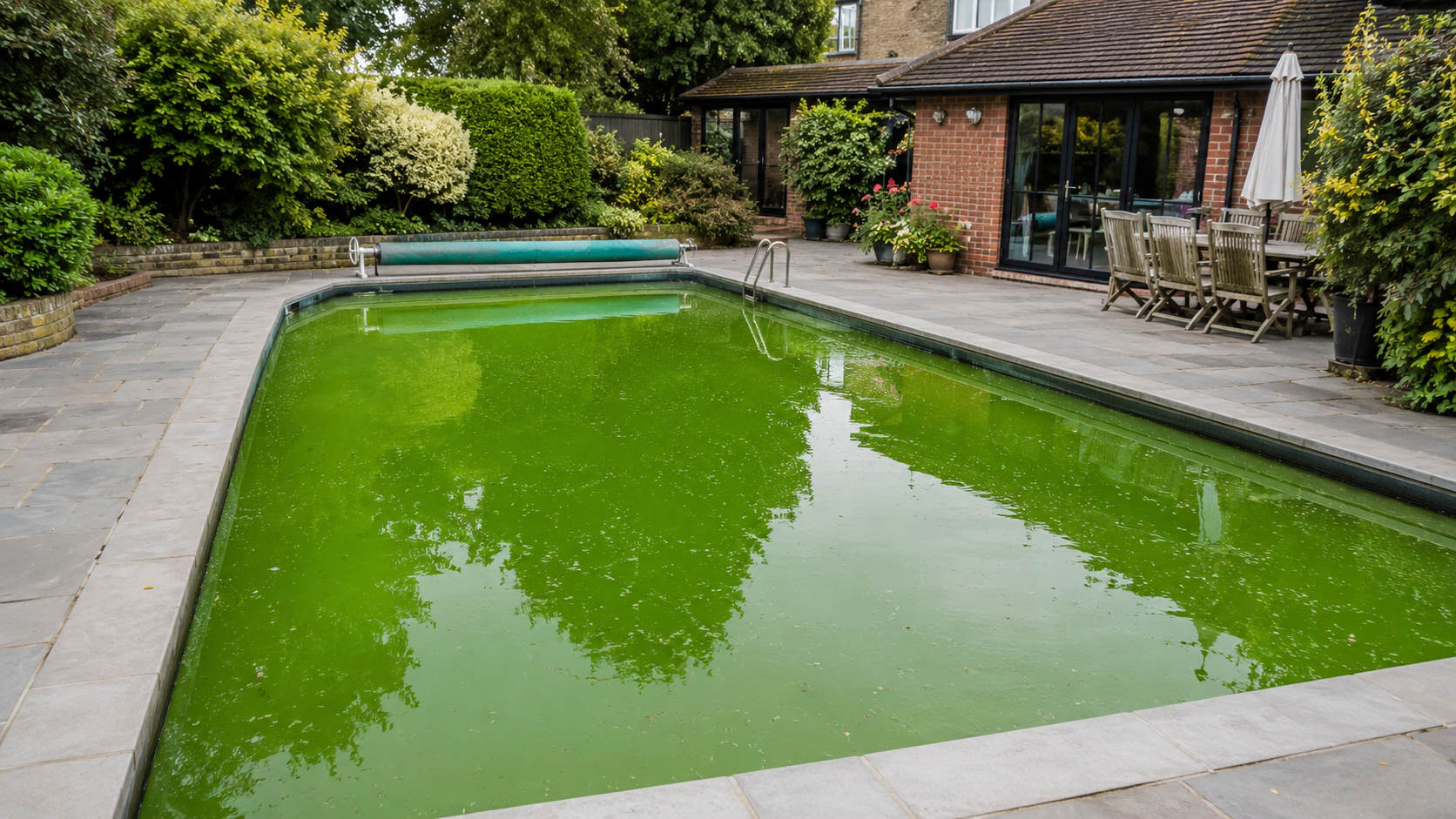
Cloudy pool water is a symptom. It can come from water-balance problems, inadequate sanitising, filtration faults or particles that remain suspended in the water. Adding more chlorine without checking those possibilities can miss the actual cause.
Stop swimming while the water is cloudy, especially if you cannot clearly see the floor. Restore clarity and appropriate water readings before reopening.
Use a simple diagnosis sheet
| What to record | Why it helps |
|---|---|
| Current water-test results | Identifies measured problems rather than guessed ones. |
| Recent chemical additions | Shows whether the haze followed a particular treatment. |
| Filter condition and water flow | Helps identify equipment limitations. |
| Recent use, weather and refilling | Gives context for the change. |
Keep the names of the products you have used, not just a note saying “chlorine”. Different products have different instructions and concentrations.
Check the equipment before the next dose
Inspect the filter and clean or backwash it according to the manufacturer. Check for restricted flow and visible damage. If the pump is showing a fault, investigate it rather than using extra chemical to compensate.
A treatment can change what is in the water, but the filtration system still needs to do its job. If clarity improves briefly and then deteriorates, include filter performance in the investigation.
Match treatment to the test result
Test the water using an appropriate kit and compare the readings with the operating guidance for your pool. Do not use hot tub targets as a shortcut for a swimming pool.
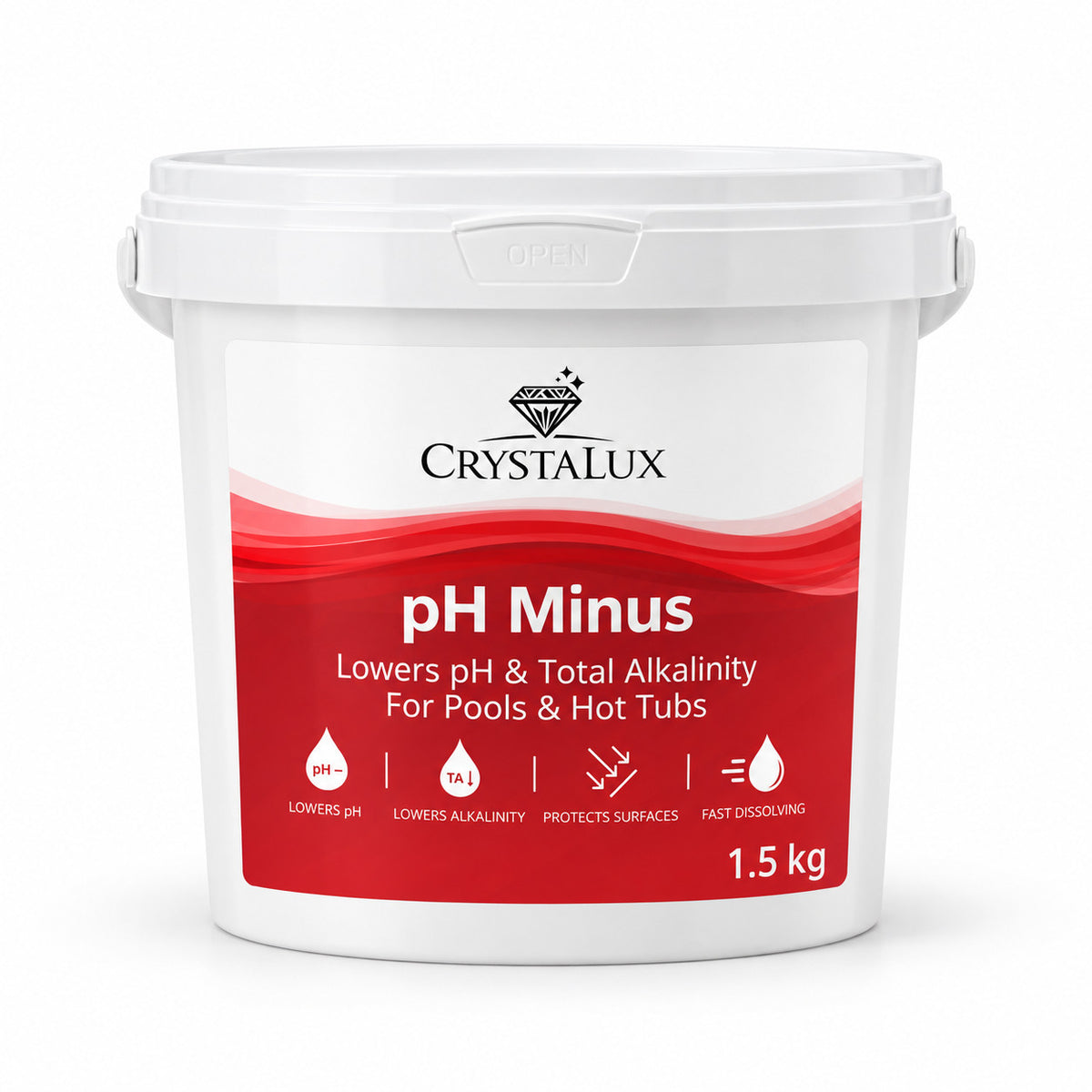
For confirmed high pH, consider CrystaLux pH Minus. For confirmed low pH, consider CrystaLux pH Plus. Follow the dose, application and retesting instructions for the product.
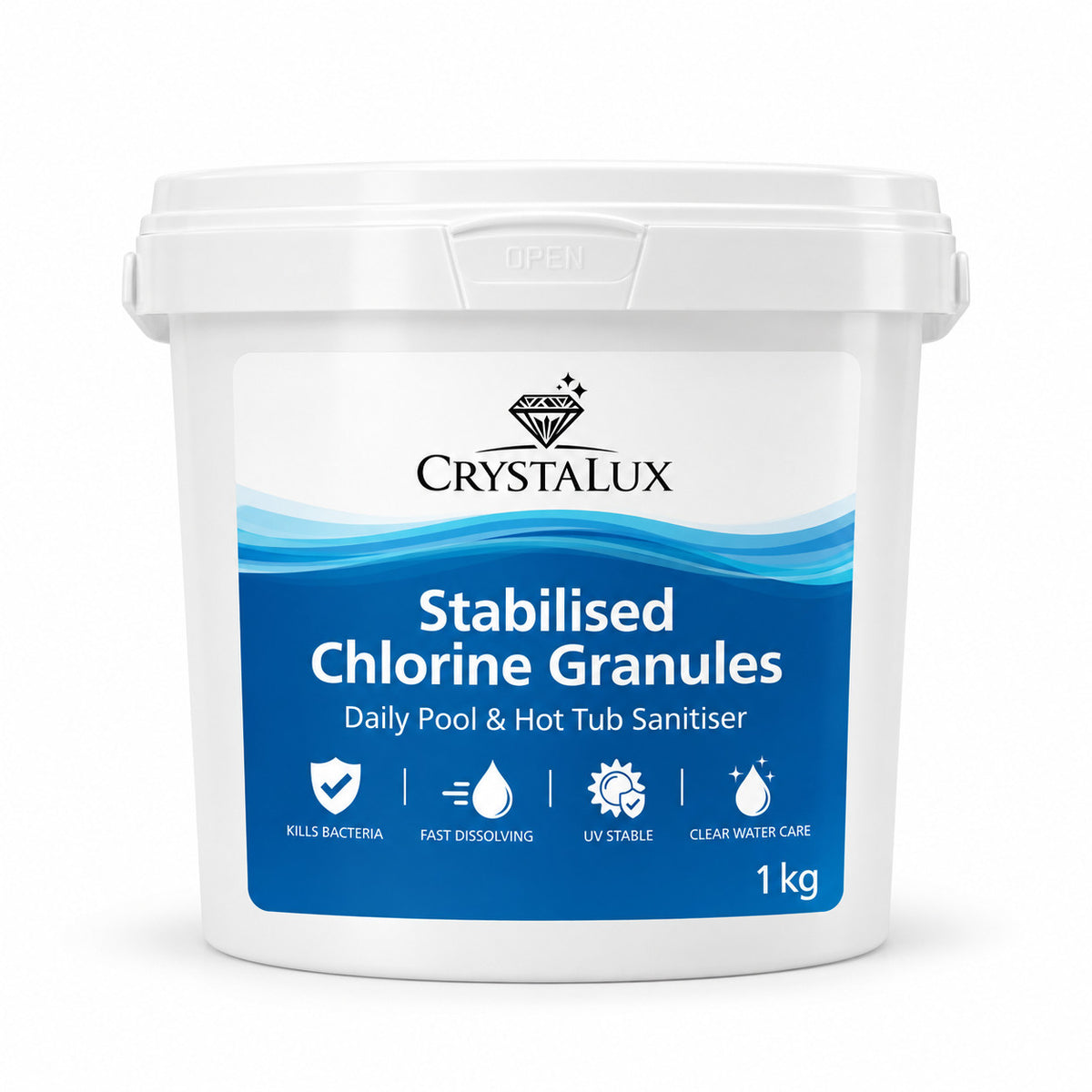
If the chlorine level requires adjustment, CrystaLux Stabilised Chlorine Granules may suit your system. Confirm suitability first and measure from the label. Do not add them merely because the water looks dull.
What about a clarifier?
A compatible clarifier can help filtration collect fine particles. It is not a replacement for adequate sanitising or a working filter. More is not automatically better: use only the specified amount.
Do not assume clarifier and flocculant are interchangeable. Before buying a settling treatment, confirm that your pool equipment supports its application and the required removal method.
Why is my pool cloudy after shock?
Review what prompted the shock treatment, the product used and the current results. Suspended material may still need filtering out, or a water-balance or equipment problem may remain. The fact that the water is cloudy does not establish that the dose was too small.
Retest as instructed and inspect the filter before repeating treatment. If results are confusing or the pool does not respond, seek a fuller water test and professional advice.
Should I drain the pool?
Do not empty a pool as a casual troubleshooting step. Ask the pool installer or manufacturer about safe water replacement. The correct approach depends on the structure and installation.
What should I buy?
Buy the product that addresses a confirmed need. If readings are acceptable and circulation is poor, repairing or maintaining the equipment may be the right next expense.
Browse the water-care range once you know which reading needs correcting. If you are unsure, send us your readings and pool details before ordering.

Written by My Store Admin