
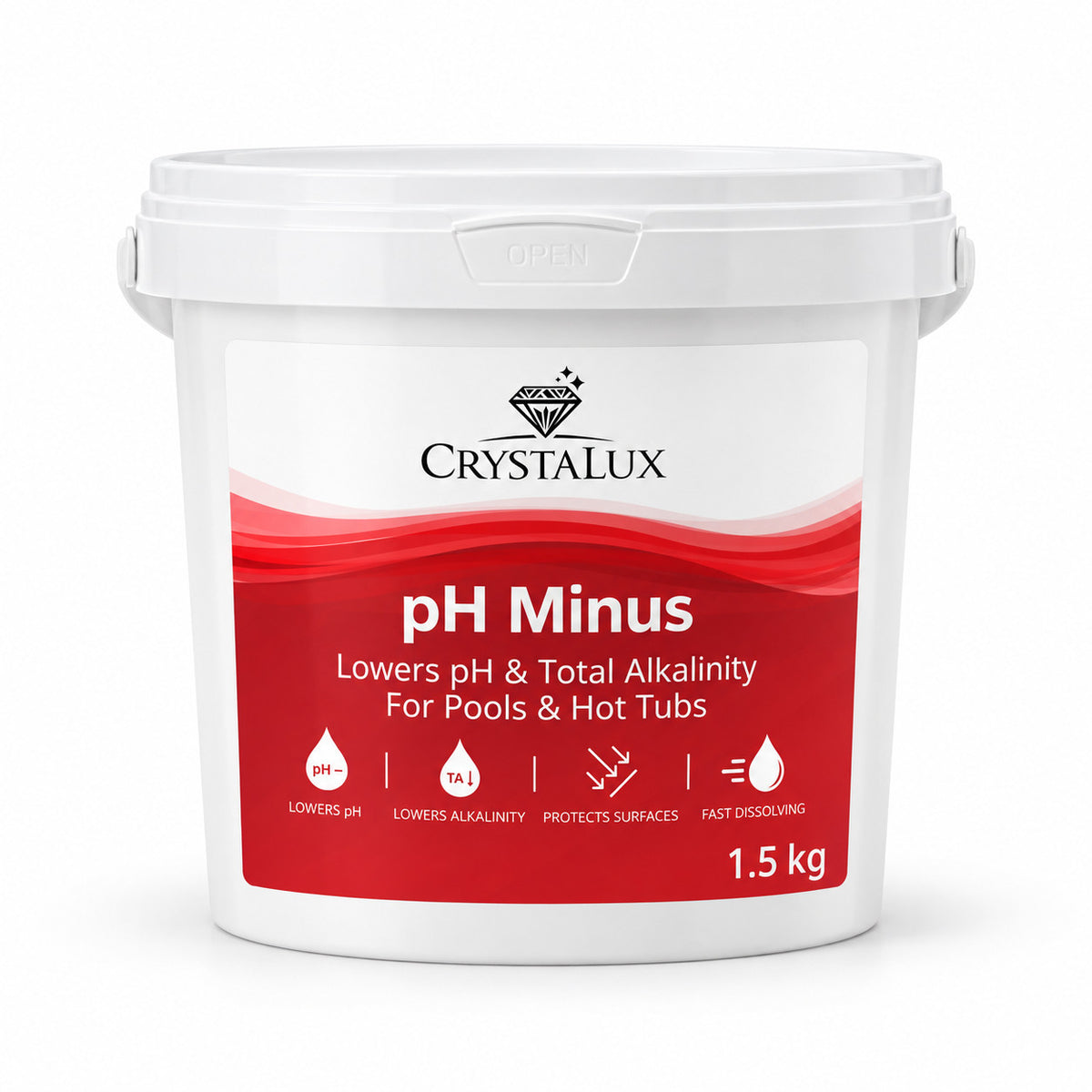

pH Minus lowers high pH in pool and hot-tub water. It also lowers total alkalinity, so test both before treating. Cloudy water or irritation alone does not prove that pH is high: use a water test to decide whether you need pH Minus granules.
This guide explains what pH Minus does, when to use it and which CrystaLux pack size to choose.
What does pH Minus do for a pool?
pH minus granules are designed to lower water pH quickly and reliably in pool water, helping restore a more comfortable and properly sanitised swimming environment. They are especially useful when readings are above 7.6, where chlorine becomes less effective and water starts to feel harsher on skin and eyes. Most buyers want a product that is easy to use, clearly priced, and available in a size that matches the pool's water volume.
When to Use pH Minus Granules
Test the Water First

Before buying or dosing, test the pH with a dependable kit or strips so the decision is based on an actual reading rather than guesswork. The ideal pH level for pool water is between 7.2 and 7.6, and anything above that range should be checked carefully. Total alkalinity matters too, because it can make pH change more slowly or bounce back after treatment.
Know the Signs of High pH
High water pH often shows up as cloudy water, eye or skin irritation, and weaker chlorine action. If the reading sits above 7.6, treatment is usually sensible rather than optional. That makes the purchase decision more practical: choose a product that corrects the issue without overcomplicating the process, especially if the pool needs attention now.
How to Choose the Right Product Size
Choose a pack for your usage
CrystaLux pH Minus Pool & Spa pH Reducer is available in 1.5kg, 3kg and 7kg packs. Choose 1.5kg for a compact supply, 3kg for a middle-size option, or 7kg when you use it more frequently and have suitable storage. Check current prices and availability on the product page.
Pack size is the quantity you buy. The dose for each treatment still depends on your water volume, pH and total alkalinity, using the instructions on the pack.
Need to raise pH instead? Choose CrystaLux pH Plus. Compare both products in our pH balancers range, or see the high-pH treatment page if your test confirms a high reading.
Check Format, Storage, and Price
Granules are often preferred because they are easy to apply and straightforward to measure. A sealed plastic container or resealable pack makes handling and storage more practical, especially across a full season. Price matters, but so does convenience: a well-packaged product that stores cleanly in a cool dry place usually proves the better long-term buy.
How to Use pH Minus Granules Safely
Prepare and Dose Correctly
Always start with the label and work out the dose for the volume of water being treated. Some products can be added directly, while others benefit from pre-dissolving in a clean plastic container first. The basic rule is simple: add chemical to water, never water to chemical. That keeps handling safer and helps the product distribute evenly through the pool.
Recheck and Adjust Gradually
After dosing, allow time for circulation before testing again so the reading reflects the full treatment. Small repeated adjustments beat one heavy dose, especially when pH is only slightly high. This measured approach stabilises the water, protects swimmers, and avoids overshooting below the ideal range. If you go too far, pH Plus brings the reading back up.
General Precautions and Storage
Handle the Product Carefully
Use gloves, eye protection, and decent ventilation when handling the granules. Do not mix them with other pool chemicals or household cleaners, and keep them away from incompatible products. Many sodium hydrogen sulphate formulations can cause serious eye damage, so take general precautions seriously every time the container is opened.
Store It Properly
Keep the container sealed, dry, and out of reach of children. Store in a cool dry place and avoid damp areas that could cause clumping or contamination. Good storage habits keep the product effective and ready when the next pH correction is needed.
Frequently Asked Questions
What is the ideal pH for a swimming pool?
Between 7.2 and 7.6. Inside that range chlorine works efficiently and the water stays comfortable for swimmers. Above 7.6, chlorine performance drops and cloudiness becomes more likely.
How much pH minus do I need for my pool?
It depends on pool volume, current pH and total alkalinity. Always work the dose out from the product label against your tested reading, then add gradually and re-test rather than dosing in one go.
Can I add pH minus granules directly to the pool?
Some products allow direct application with the pump running. Others should be pre-dissolved in a clean plastic container first. Check the label, and always add the chemical to water rather than water to the chemical.
How long before I can swim after adding pH minus?
Follow the product label for circulation and waiting times, then re-test. Only use the pool when pH and sanitiser readings are within the recommended ranges for your pool.
What is pH minus made of?
Most pH minus granules are sodium bisulphate, also known as dry acid or sodium hydrogen sulphate. It lowers pH and, to a smaller extent, total alkalinity.
Does pH minus lower chlorine?
It does not remove chlorine, but correcting high pH makes the chlorine already in the water noticeably more effective. If sanitiser is also low, see our guide to dosing stabilised chlorine granules.
Choose the Right Granules for the Job
The best pH minus product is the one that matches your pool size, the urgency of the problem, and the way it will be stored and handled. If the reading is above 7.6 and you want a quick correction, a clearly priced, easy-to-use granule pack is usually the most practical option. Browse the CrystaLux pH balancers range and order online for fast UK delivery.


